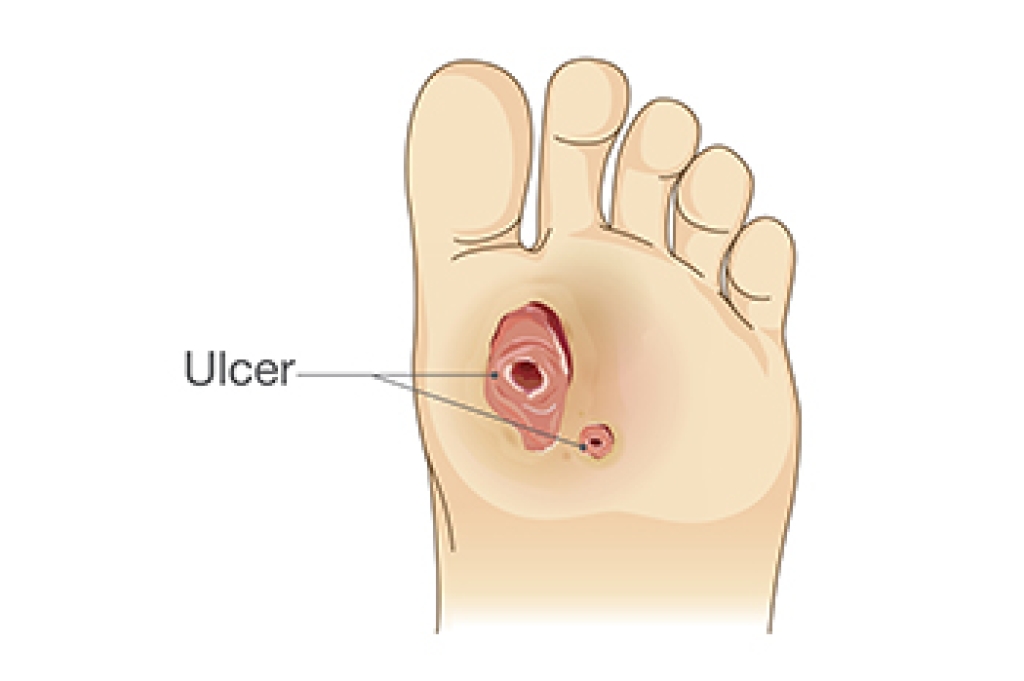
Diabetic foot infections develop when bacteria enter damaged skin, often through cuts, blisters, or cracks. Diabetes damages nerves and reduces blood circulation, making it harder to feel injuries and heal wounds. As a result, a small foot injury may become a serious infection before it is noticed. Common warning signs include redness, swelling, and warmth surrounding the affected area. Other symptoms may include drainage or an unpleasant odor. Because nerve damage can reduce pain sensations, an infection may be present even when the foot does not hurt.
Several factors increase the risk of diabetic foot infections, including poor blood sugar control, reduced circulation, and peripheral neuropathy. These problems slow healing and allow bacteria to spread into deeper tissues. Wearing poorly fitting shoes, walking barefoot, or neglecting daily foot inspections also increase the chance of injury. When an infection is left untreated, it may damage muscles and bones, potentially leading to tissue death. Severe infections may lead to hospitalization or loss of limb to prevent further complications. Early recognition and professional treatment are essential for protecting foot health.
Treating a diabetic foot infection begins with a careful podiatric examination. The podiatrist checks the skin, evaluates circulation, and determines how deeply the infection may have spread. Depending on the wound, imaging testing may be necessary to identify bone involvement. Treatment includes cleaning the wound, removing infected or dead tissue, and prescribing appropriate antibiotics. The podiatrist may also recommend specialized dressings and protective footwear to reduce pressure on the affected area. Regular follow-up visits help monitor healing and identify complications early.
Preventing diabetic foot infections requires consistent daily care. Inspect your feet for cuts, blisters, or color changes, and wash and dry them carefully. Avoid walking barefoot, wear properly fitting shoes, and never attempt to cut away damaged skin yourself. Keeping blood sugar within your recommended range can also support healing and reduce future risks. Contact a podiatrist promptly if you notice a wound or possible infection, even if it seems minor. If you have developed a foot infection related to diabetes, it is suggested that you be under the care of a podiatrist who can effectively treat and properly manage this serious condition.
Wound care is an important part in dealing with diabetes. If you have diabetes and a foot wound or would like more information about wound care for diabetics, consult with Lesly Honore, MD, DPM from New York. Our doctor will assess your condition and provide you with quality foot and ankle treatment.
What Is Wound Care?
Wound care is the practice of taking proper care of a wound. This can range from the smallest to the largest of wounds. While everyone can benefit from proper wound care, it is much more important for diabetics. Diabetics often suffer from poor blood circulation which causes wounds to heal much slower than they would in a non-diabetic.
What Is the Importance of Wound Care?
While it may not seem apparent with small ulcers on the foot, for diabetics, any size ulcer can become infected. Diabetics often also suffer from neuropathy, or nerve loss. This means they might not even feel when they have an ulcer on their foot. If the wound becomes severely infected, amputation may be necessary. Therefore, it is of the upmost importance to properly care for any and all foot wounds.
How to Care for Wounds
The best way to care for foot wounds is to prevent them. For diabetics, this means daily inspections of the feet for any signs of abnormalities or ulcers. It is also recommended to see a podiatrist several times a year for a foot inspection. If you do have an ulcer, run the wound under water to clear dirt from the wound; then apply antibiotic ointment to the wound and cover with a bandage. Bandages should be changed daily and keeping pressure off the wound is smart. It is advised to see a podiatrist, who can keep an eye on it.
If you have any questions please contact our office located in Hempstead, NY . We offer the newest diagnostic and treatment technologies for all your foot and ankle needs.
